
Kelsey Timpany X DC Maureen Stachowicz
Wired to Ride
Your Nervous System & Performance
Why Is Everyone Talking About the Nervous System?
A phrase that keeps coming up more and more in riding circles is the central nervous system. Maybe it is part of getting older, or maybe it is the reality check that comes after years of pushing hard and expecting the body to always keep up. Many riders eventually learn that you cannot run on coffee (guilty), skip meals, ride for hours under fueled, and expect to feel sharp forever.
At some point, many of us notice we are not riding with the same energy, confidence, or consistency we once had. It’s at that point we stop blaming motivation and begin to question the bigger picture at play…


Meet Dr Maureen Stachowicz
Originally from France, Dr Maureen Stachowicz’s path into chiropractic began through her own experience as an athlete. As a basketball player dealing with chronic fatigue, and difficulty performing at a high level, she went searching for answers that would improve not only performance, but overall wellbeing. That journey led her to chiropractic care, which she credits with changing both her life and her family’s life.
Today, as founder of Optimal Health Queenstown, Maureen has become one of the most trusted practitioners in the region, working with a wide range of athletes to support recovery, performance, resilience, and long-term health. She is highly regarded for looking beyond symptoms or isolated injuries, helping people understand the bigger picture of how their body, nervous system, and lifestyle all interact.
Personally, Maureen was pivotal in opening my eyes to how ‘red lined’ my nervous system was, following a broken collarbone and fractured vertebrae. While treatment began with those acute injuries, it quickly became clear there was a bigger picture that I was missing. My nervous system was under significant stress, and had been for years and that was affecting recovery, energy, mood, and performance both on and off the bike.
“All too often I have people coming into my clinic, including high performance athletes, struggling with fatigue, slow recovery, poor sleep, hormone, gut and mental health issues, just not feeling themselves.”
Patients often struggle to identify a clear starting point to this downhill battle. The onset is traced back to an event that initially appeared minor and unrelated – such as a little crash they often have, a hard training session they always do, another trip overseas or a head cold – which, over time, coincided with a broader and progressive decline in overall function – or ‘the last straw on the camels back’.
Patients have often “tried everything” to get back on track, rehabilitation protocols, nutritional supplements, training adjustments or symptom-specific interventions. And despite all their effort, they report little to no improvement.
Oftentimes these patients are really struggling and don’t know where to turn. It can be a lonely overwhelming place to be.”

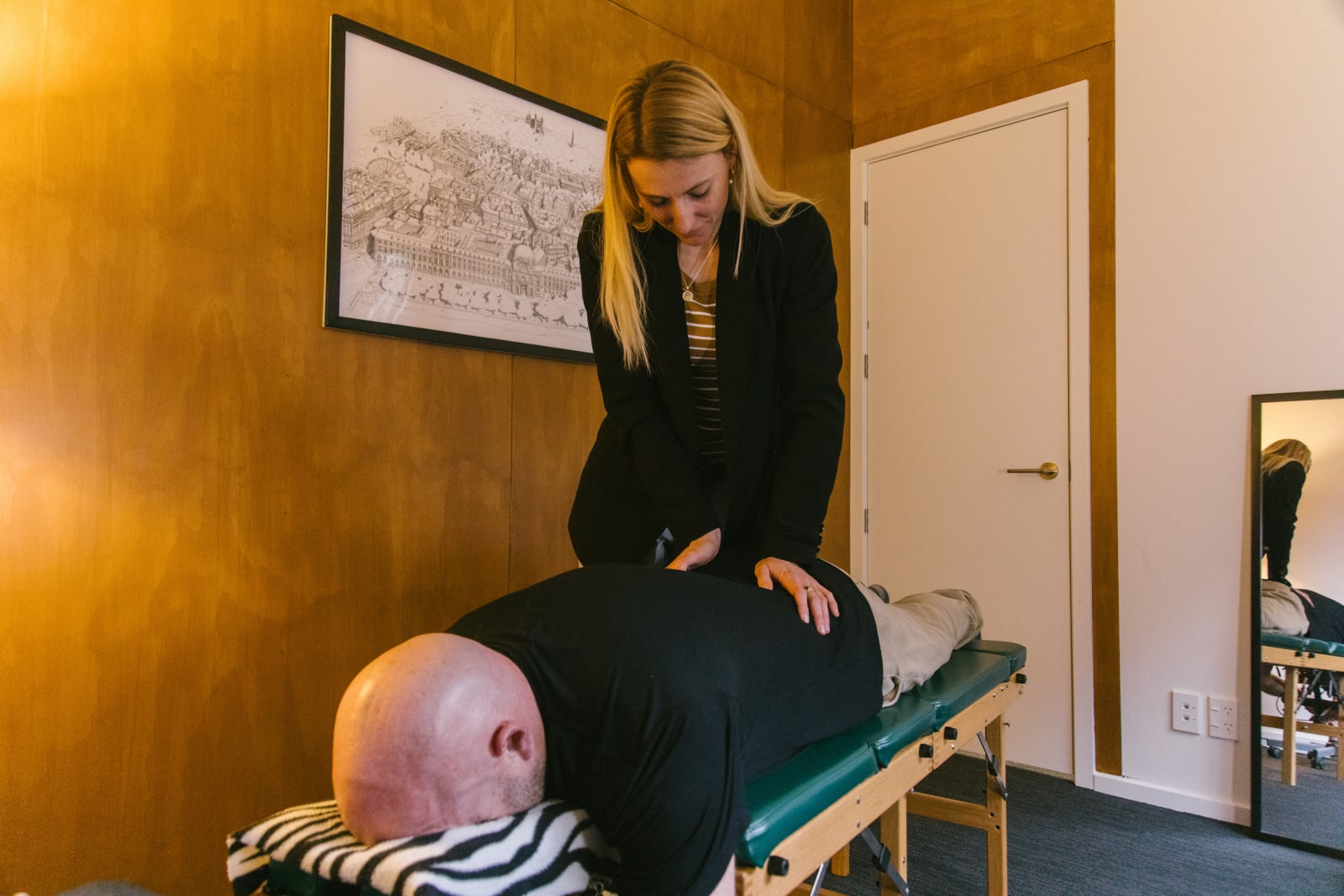
How Can Chiropractic Care Help Riders and your Nervous System?
Your nervous system is the control centre behind everything you do on a bike. It influences how you react, move, focus, recover, and perform under pressure, and in both riding and racing it can be the difference between feeling sharp and flowing or tense and off your game.
There are three types of stressors impacting our nervous system function that can cause dysregulation: physical traumas, emotions and toxins. They can all impact how our brain and body can communicate and therefore affect our body’s ability to self-regulate, organise and heal.
When you ride trails or race at speed, your brain is constantly processing information and sending signals to your body as you read terrain, adjust balance, brake, corner, and respond to obstacles in real time.
“For riders, a well-functioning central nervous system is critical. It is the brain-body connection that drives performance. The nervous system is the “command centre” for every muscle contraction and decisions.
It is well known that chiropractic care improves the brain’s awareness, better proprioception, better movement, more control, less compensation, better sensorimotor integration, muscle strength… all important for riding optimally.
If there is mechanical interference in the spinal column, the signal from the brain to the muscles can be slightly delayed or dampened. Chiropractic care helps reduce this ‘neural noise’, improving reaction time and hand-eye coordination by ensuring the sensory-motor loop is functioning without interference.”



But what’s most relevant to today’s article, especially when it comes to your nervous system and how you ride, is the growing evidence showing chiropractic care may influence activity in the prefrontal cortex, the part of the brain responsible for higher level thinking, regulation, and purposeful action. This area helps you to:
- Set goals, organise them, and take action
- Hold and manage information
- Reduce impulsive emotional responses through better emotional regulation
- Keep your behaviour aligned with your goals rather than your emotions
- Coordinate timing and sequencing in movement patterns, while linking them to the task at hand
In simple terms, it helps shift you from a stress response into a state of adaptability and regulation.
Can you see how relevant that is for performance, enjoying your riding, and avoiding burnout?


Female Athletes and Nervous System Load
For female athletes and everyday riders, there are additional factors to consider when it comes to training and recovery. Hormonal shifts, sleep quality, nutrition, and cumulative life stress can all influence how the body responds to load from day to day. This can affect energy, perceived effort, and how resilient the nervous system feels under pressure.
“Oestrogen, for example, is generally associated with enhanced neuromuscular efficiency and a better capacity to recover, while progesterone has a more calming effect on your nervous system increasing the sensitivity to big effort or emotional load.
Our hormonal fluctuations interact with our body’s stress response and our primary stress hormone (cortisol) and directly influence how stress is perceived and managed.
Those constantly changing phases in our body allow us to thrive if we understand them and go with them, allowing us to increase our performance and resilience – but they can also be our biggest handbrake if we go against them and try to do the opposite of what they allow us to do.
While there are some normal natural changes within our resilience to stress, recovery ability, a dysregulated nervous system can drastically affect these natural fluctuations and create a dysregulated hormonal cycle (length, symptoms, emotions, cravings..) affecting training and racing capacities.”
Recognising these patterns can help female riders train and ride with more awareness, adjust expectations when needed, and reduce unnecessary frustration when performance feels different from one week to the next.


8 Top Tips from Dr Maureen Stachowicz
- Health is simple, maintain it.
- It is never too late to start looking for answers.
- You can perform without full function, but you cannot improve without optimal health.
- Less is more.
- We are all incredible individuals, what is right for your friend does not have to be for you.
- Your nervous system controls and coordinates everything, look after it and it will look after you.
- Your nervous system function is intimately related to the integrity of your spine, make sure someone looks after it
- Reach out for help!

The Goal Is Not Perfection
It is important to recognise that not every ride will feel the same. Variability is normal. Some days will feel effortless, others will not.
If you are constantly feeling wired, tight, reactive, or mentally drained, that can be useful feedback that baseline stress is too high and recovery needs attention.
Flow is not something you force. It is something that becomes more available when your system is regulated, your body feels safe, and your brain is free to focus on the task at hand.
When that happens, riding feels like riding again and all feels right in the world again!
An Important Note from Dr Maureen
When learning about topics such as the nervous system, recovery, and performance, it is important to remember that articles, podcasts, books, and social media can provide useful education, but they cannot account for the full context of your individual situation. Your health, history, lifestyle, training load, stress levels, and goals are unique to you.
Use general information as a starting point for awareness, not a substitute for personalised care. If you are experiencing ongoing physical symptoms, fatigue, injury concerns, burnout, or challenges with recovery, it is always worth seeking guidance from a qualified and experienced healthcare professional.
You can find Dr Maureen Stachowicz at Optimal Health Queenstown, where she works with individuals and athletes to support health, recovery, and performance through a personalised approach.