
Kait Boyle
A Kokopelli Fastest Kait Time
A Different Kind of FKT
Wind whipped sand into my face as I stared at the “See what’s possible” mantra scribbled onto painters tape on my stem, keeping my front wheel in focus as I worked to keep it straight and moving through the sand. I was halfway into my FKT attempt on the Kokopelli route and was coming to terms with the reality that while my body and bike were delivering an FKT capable performance, the trail conditions were not going to allow it on this day. I was there to see what was possible, an intention I’d set before starting and now maybe beating my old FKT could be possible – a Fastest Kait Time. But at mile 70 I wasn’t sure, the sand was sucking all the energy out of my body and speed out of my bike, and I was drawing on all the mental tools I have to accept and commit to making the most of a hard day.
Back in 2020, I met the bar Rebecca Rusch had set on the route in 2013, establishing a new FKT of 13:08, which notably was my first big race effort after a traumatic car accident in 2018 nearly two years prior. Records are meant to be broken and following an attempt in challenging conditions, Hannah Otto successfully further raised the bar on Kokopelli with a blistering new FKT of 11:53 in Spring, 2024. Initially I was simply impressed and didn’t think much of going back. But by last Fall, following setting records at Vapor Trail and Marji Gesick, I found myself wondering what was possible for me on Kokopelli now. All three routes are 100-140 miles long, are mountain bike races, and would take about 11.5-15 hours. How far have I come in the past six years?
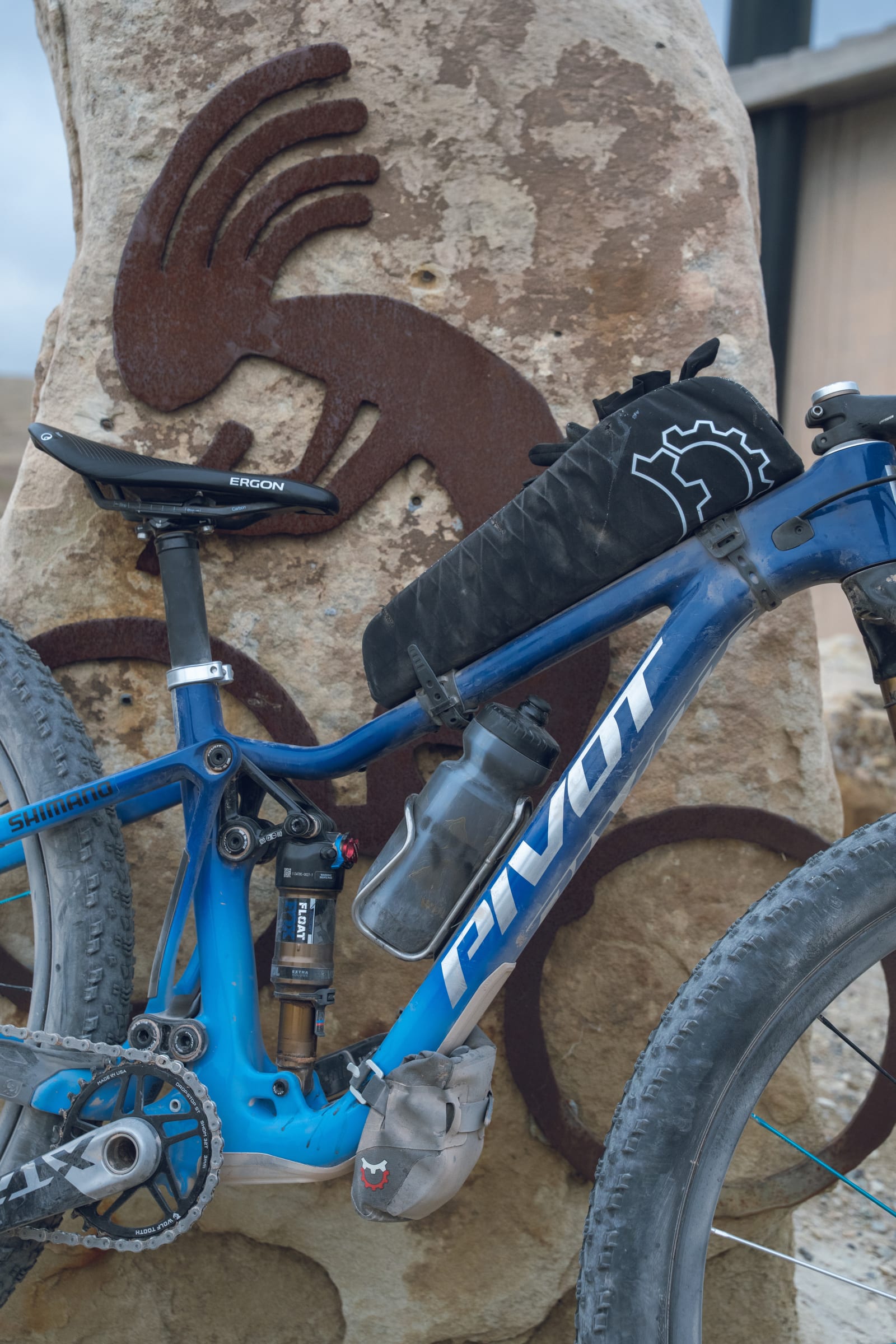
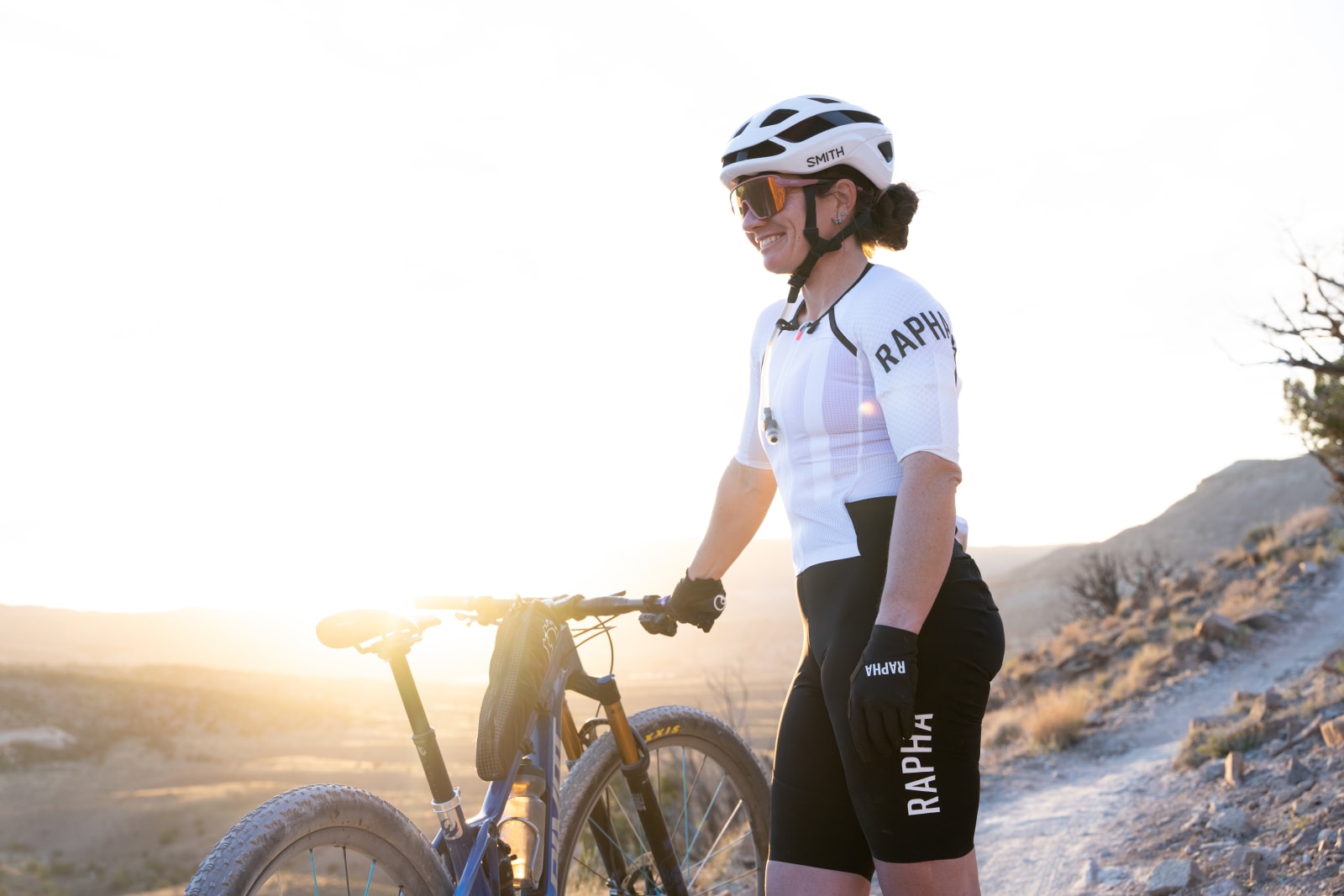
Inspired and motivated, I trained all winter under the guidance of a new coach, with Kokopelli being the first objective of 2026 (this process has been documented monthly here on my Substack). Training went well, and following a training camp in Moab in early March we believed I had the fitness to challenge the FKT.
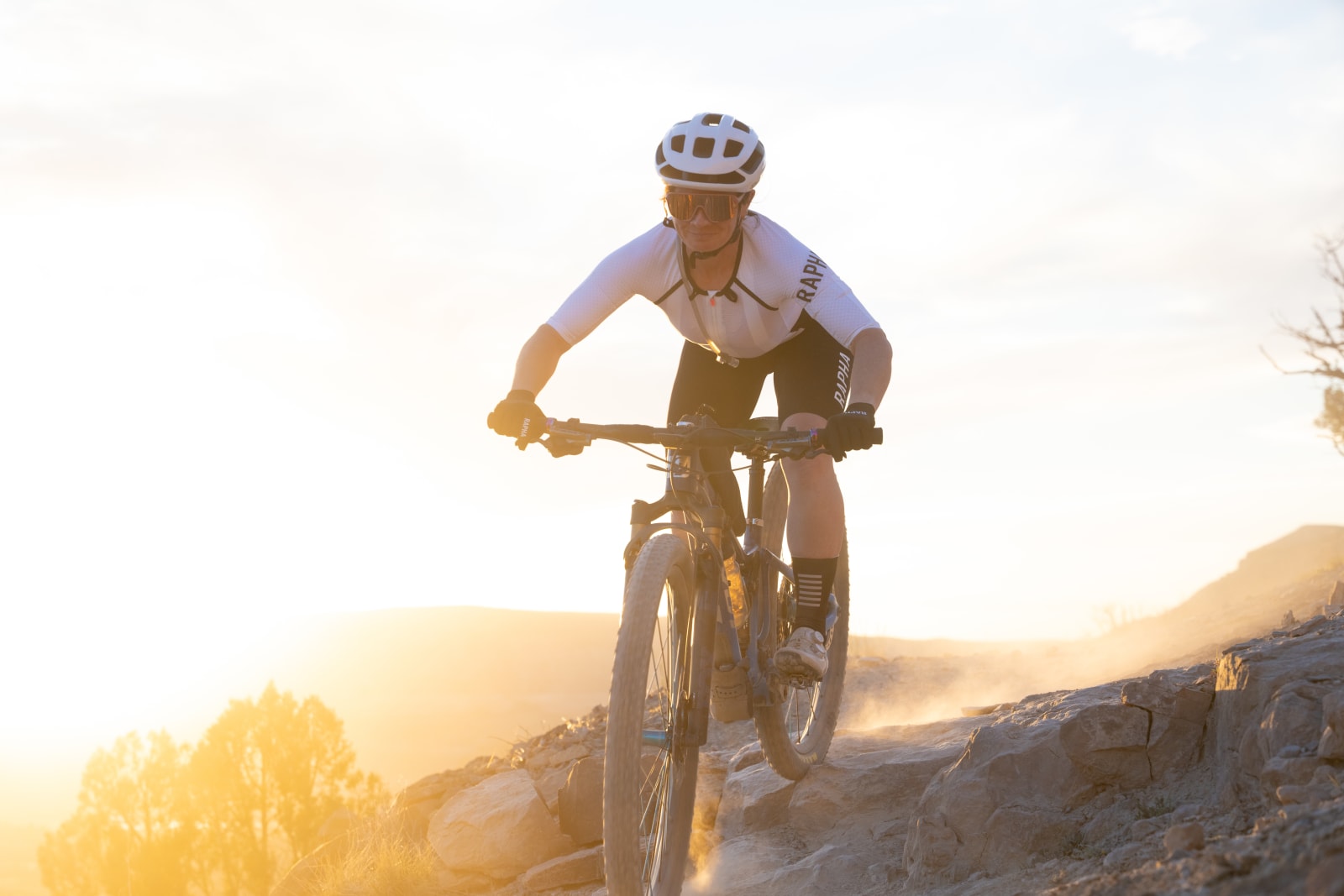
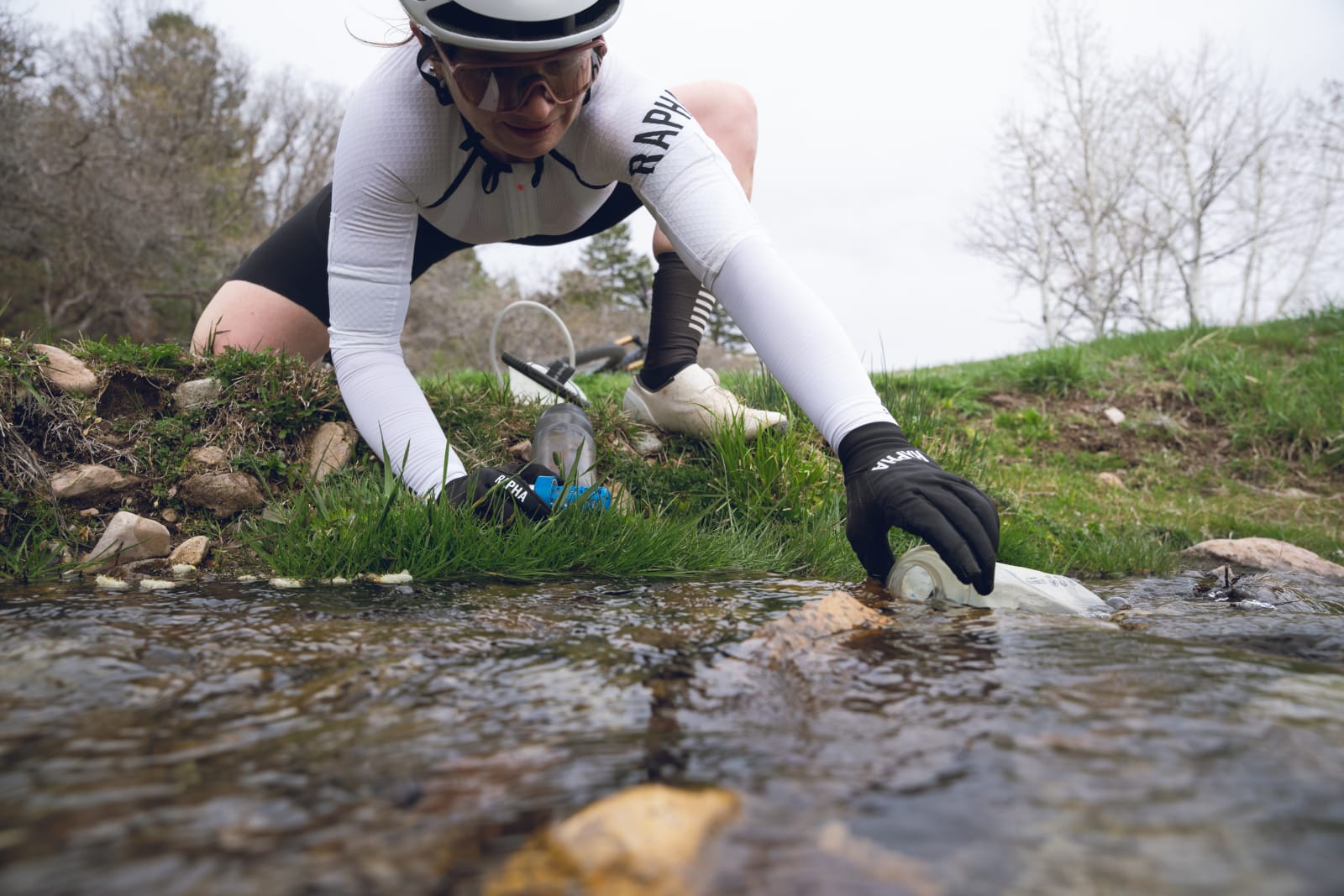
On March 31 I set out under cloudy skies with a breeze and started climbing an especially dry and sandy Sand Flats Rd. Despite this, I was on pace and feeling good through the La Sals. I stopped to fill water in Castle Creek, knowing my water stops would equalize with Hannah’s over time. But then following the highpoint in the mountains, I watched time start to slip away as the route transitioned from pavement and maintained roads to the 4×4 tracks that descend the flanks of the mountains. I surfed, slid, and sunk into sand down into Onion Creek, scrambled and slipped my way up over Rose Garden Hill and the climb beyond, and kept telling myself maybe it would get better.
The Kokopelli Trail was my first ever bikepacking trip in 2011. I remember feeling so challenged by the task of riding all day, a demanding feat for anyone and made especially harder by riding with a 50L loaded backpack with my overnight kit – 2011 was before bikepacking bags were well known and long before I could fathom being a professional bikepacker. But on 2.0 mtb tires, I don’t remember much sand aside from the normal spots mid-route.
I crested the Top of the World and the track transitioned to a “graded” dirt road and I dug in, trying to maintain speed as I surfed across the road, drifting around corners while searching for a strip of firmer surface. I passed the spot I’d hunkered in lightning position when attempting an FKT years earlier – a chance of rain had blown up into a band of thunderheads that sent heavy rain, hail, and 1-mississippi crack/booms over the route, scaring me off my bike and into the relative safety of dispersed pinyon-juniper stand. That attempt ended there, as all washes flash flooded and the clay soils to the east turned to impassable mud. The desert is a finicky place. I parted a cattle drive and drove my bike towards the Colorado River.
I crossed the Colorado River at Dewey Bridge and the waypoint I’d created on the route on Ride with GPS showed my split time on my COROS Dura headunit. Despite my efforts, I had lost 25 minutes from the high point to the Colorado River. I sighed, turned left and started climbing up Yellowjacket. “Stay on it” popped up on my screen as I began the climb. It became my mantra for this next section. I recalled Yellowjacket to be the most sandy stretch of the route, and sure enough, I was quickly on and off my bike, trudging in the kind of deep sand that spills over your shoes and falls away from your steps as you push into it — beach sand. Working hard and moving slowly, I finished my water.
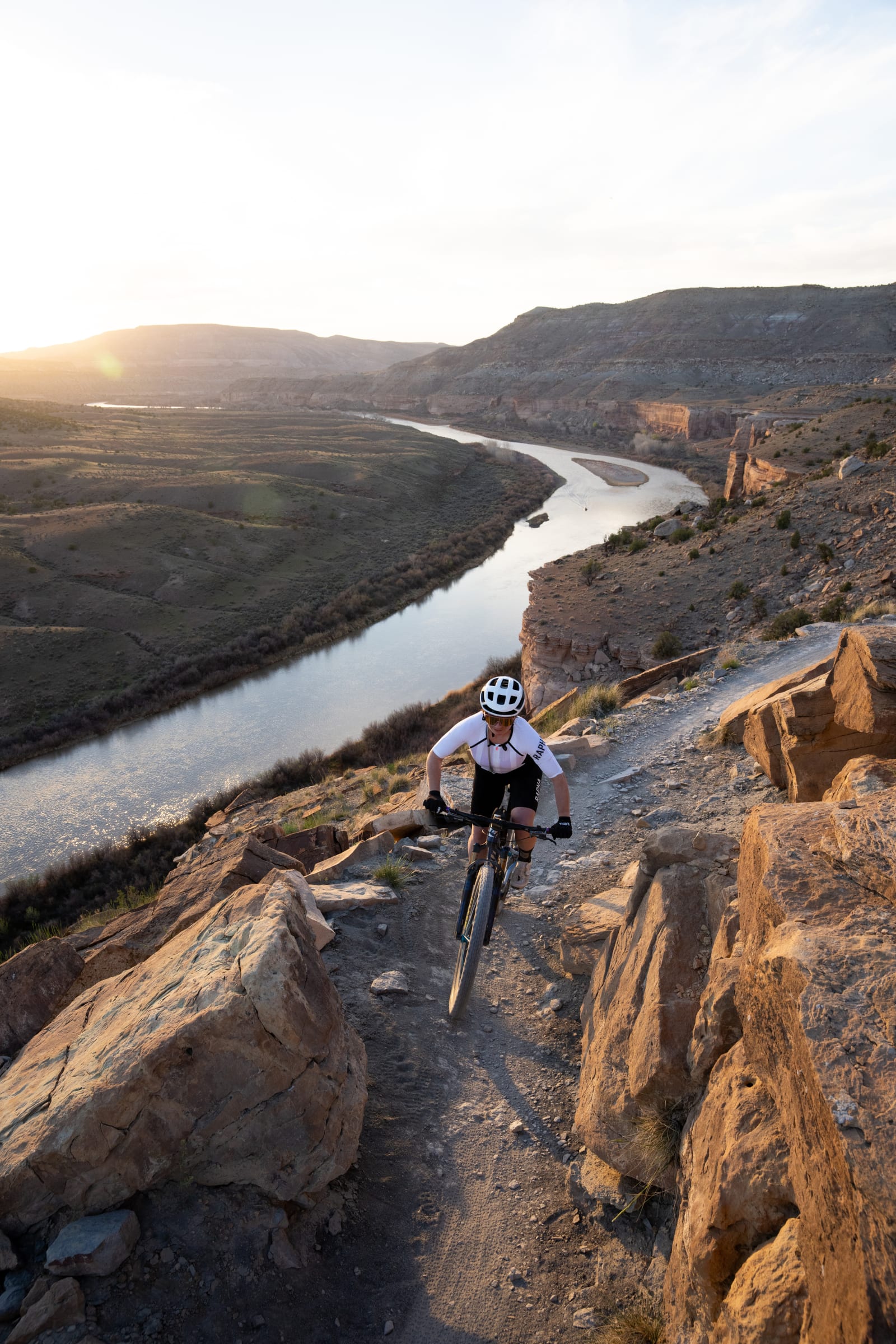
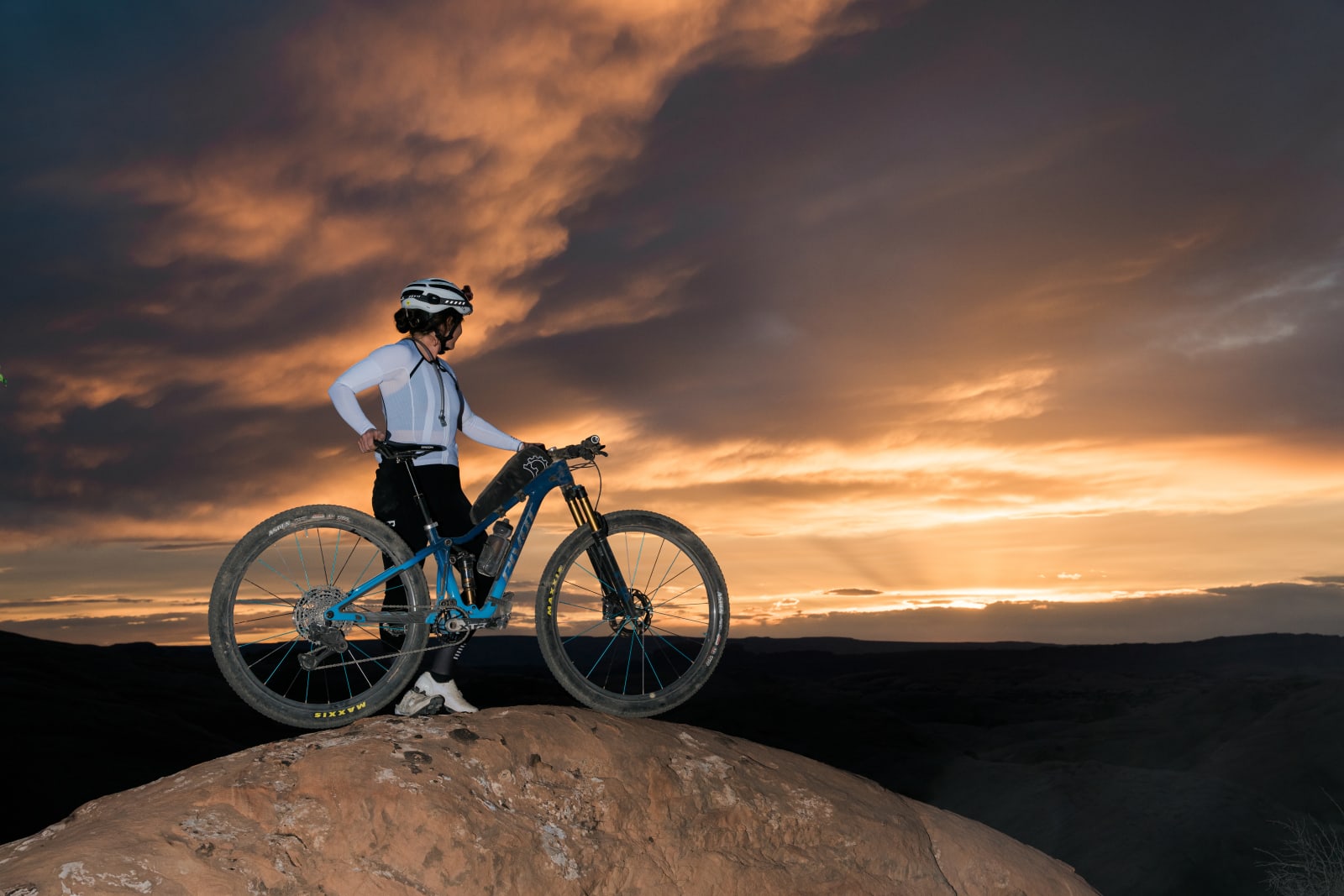

At the crest of the climb I pointed my Mach4 downhill, passing the place that in a different FKT attempt I had pulled over while on FKT pace, laid my Mach4 down, and took a nap. It was Thanksgiving, I’d just won the 24hr World Championship a month prior, and my race season had started in February with a course record at 24hrs in Old Pueblo – 11 months later I was exhausted. I smiled, thinking of how far I’ve come since then, and how now I’m on the fourth version of the Mach4 since then, too. I’d like to think we’ve evolved in step together. Instead of stopping, I popped some caffeine gum in my mouth to stave off the feeling of dehydration and hunger – without water I couldn’t eat, and without eating I was approaching a bonk.
At the bottom of the descent, I charged past the photo crew, Anne and Jen, at their van and onto the singletrack, determined to get to the river quickly and not ready to call it a day or give in to the lure of water and an easy way out of what was shaping up to be a very challenging day on the bike. The Kokopelli FKT is self supported, so while they could quietly intercept my progress to take photos, I couldn’t take any food, water, or mechanical support along the course.
With Anne behind me on her Shuttle AM, I enjoyed the speed of some firm ground heading towards the river. I stopped at my waypoint for water along the river, taken from the spot where I’d refilled in 2020. Confused, I looked at the river to the right of the trail, flowing out of reach below ledges down the bank and couldn’t identify the spot that I vividly remembered scooping water from, trailside. This can’t be right, I thought, glancing at my GPS track. The route left the river ahead of me so I turned around and backtracked until I found a different place I could scramble down the bank to the river. My mouth was parched and I drank a half liter on the spot, then filtered another 2.5 liters to carry to the finish. I’d been out for nearly an hour and hadn’t been able to eat so my body needed a moment to reset. I carried on realizing my water spot was inaccessible because the river is so low from the winter drought, the same reason the route was dehydrated into sand.

Rising over the crest of a hill I saw two specks in the distance. I floated along over a sandy two-track towards them, wanting to get into an aero position on my bars but wary of losing control of my front wheel in the sand while getting pushed around by a cross wind. The specs turned into two cyclists standing amongst the blowing tumbleweeds with their gravel bikes tossed aside, front wheels spinning freely in the air in the wind. They looked lost, their tracks coming from the other direction indicated a squirrely struggle on narrower tires, loaded bikes, going into a 30 mph headwind. Their jackets billowed out behind them like flags. I could count on one hand the hours until I would be at the finish, out of the sand, out of the wind, and drinking fresh water again. I resolved to finish, no matter the final time.
“I’m a closer” arrived on my screen as I rode a tailwind towards Westwater. On the pavement and techy slickrock that followed I resumed riding at FKT pace – this lifted my spirits as I plunged down off the Zion rim into Colorado. Blowing sand hit my face and eyes as I rode into the wind, winding and rolling around the drainages, resuming sand surfing and sliding. At Rabbit Valley I took my last gel, put my head down and hammered toward the singletrack with just over 2 hours left.
The singletrack gave my mind something else to focus on – riding techy trail rather than sandy two-track. I’d ridden it two days prior and knew what to expect. Down to Salt Creek, up Troy Built. Across Lion’s. Around to Marys. To the finish. My legs were still strong, my bike moved smoothly across the tech, my head was focused on smooth and fast. I finished it 5 minutes faster than my FKT goal split and turned onto the gravel to the trailhead.
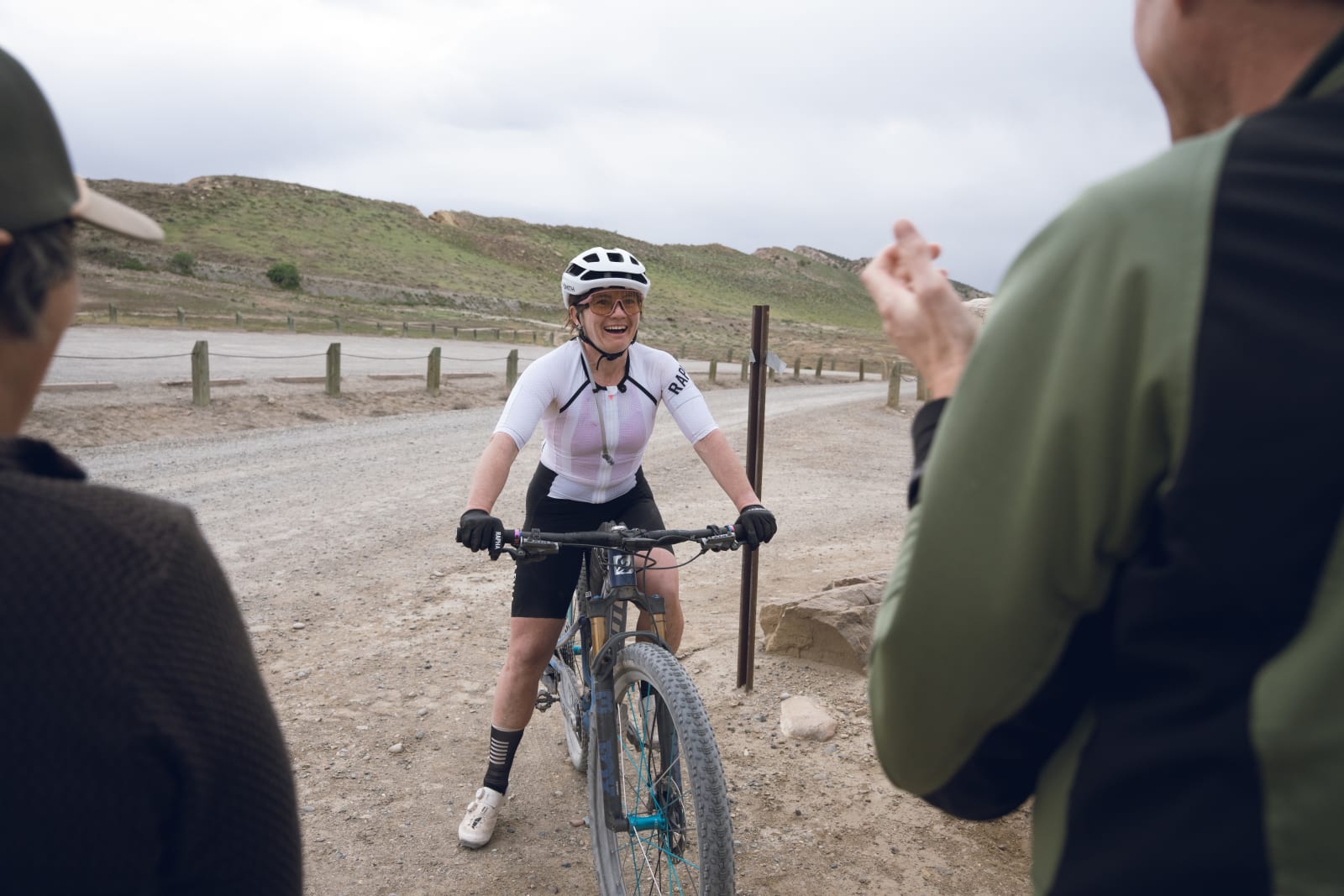

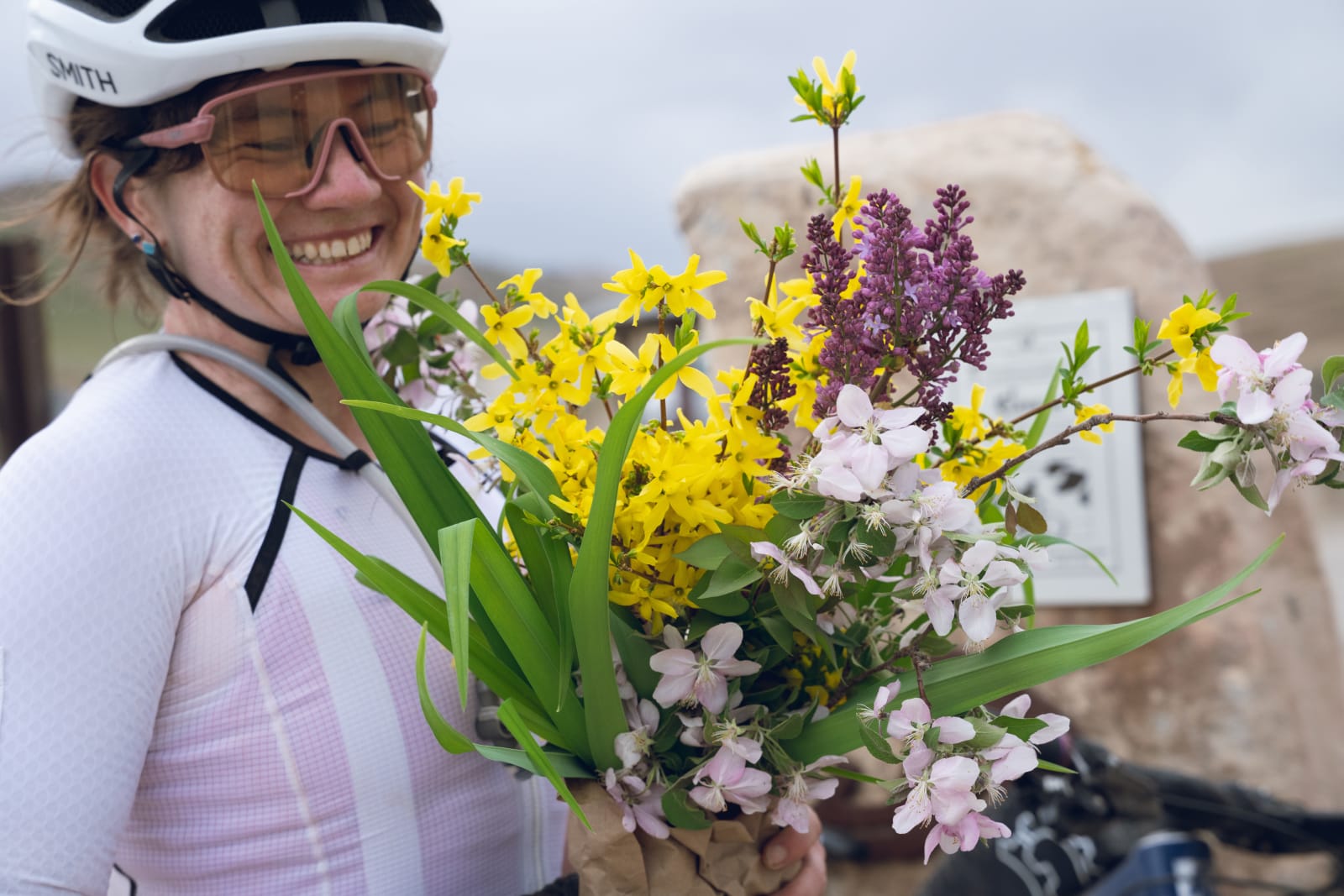
A group with my husband, Will, our dog, Hank, and old and new friends came into view with Hank howling alongside their cheering. I never felt more supported for giving my best and coming up short of my ultimate goal.
I hit stop on the Dura at the Kokopelli sign – 12 hours, 57 minutes. Over an hour slower than Hannah’s FKT. Over 10 minutes faster than my 2020 time, in far slower conditions. A different kind of FKT – a Fastest Kait Time, my dear friend Greg pointed out as we all stood at the finish, reflecting on the dry conditions, wind, and challenges of the day.
Over the course of 15 years of bikepacking and ultra-racing the hardest days have always been the days with the tough uncontrollable elements – being sick, harsh weather, brutal trail conditions, bushwhacking… but the most disappointing days have only been the days I didn’t give my best and gave up. This Kokopelli effort goes down as one of the hardest days on the bike; I had fun at the beginning, and at the end, but for 90 miles I struggled to find rhythm and enjoy the ride. But I’m incredibly proud of the effort, because despite the challenges, I met and accepted the day as it was, and committed to the task at hand. The time may not reflect my capabilities on the trail on an ideal day, but it does reflect what’s possible for me now, and how far I’ve come. And that’s what I set out to do.
To keep up with Kait and her adventures follow here on Instagram HERE.